
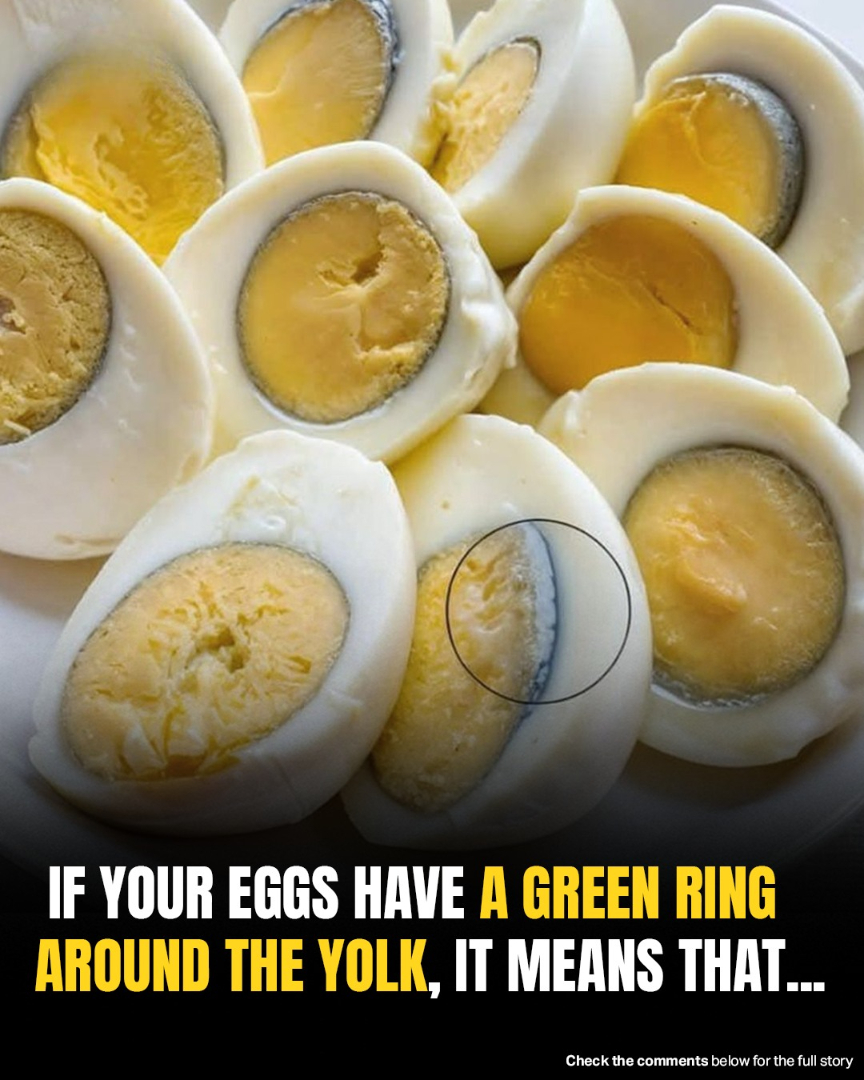
**What Causes the Green Ring Around Hard-Boiled Eggs? The Truth Might Surprise You**
You peel your hard-boiled egg, slice it open—and there it is. That strange greenish-gray ring around the yolk. It might look unappetizing, even a little concerning. Is it spoiled? Is it unsafe to eat? Before you toss it out, here’s what you really need to know.
**The Real Reason Behind the Green Ring**
That green ring isn’t mold or a sign that your egg has gone bad. In fact, it’s the result of a completely natural chemical reaction that happens during cooking.
When eggs are boiled for too long or at too high a temperature, the sulfur in the egg white reacts with the iron in the yolk. This reaction forms a compound called ferrous sulfide, which creates that greenish-gray color around the yolk.
**So… Is It Safe to Eat?**
Yes—completely safe. While the color may look odd, eggs with this green ring are perfectly edible. The taste might be slightly different, and the texture of the yolk can become a bit dry or chalky, but there’s no health risk involved.
**Why It Happens More Often Than You Think**
This issue is surprisingly common, especially when eggs are overcooked or not cooled properly after boiling. Even a few extra minutes on the stove can trigger the reaction. Large batches and high heat make it even more likely.
**How to Prevent the Green Ring**
If you want perfectly yellow yolks every time, here are a few simple tips:
* **Avoid overcooking:** Once the water reaches a boil, reduce the heat and let the eggs simmer instead of aggressively boiling.
* **Follow proper timing:** Typically, 9–12 minutes is enough depending on egg size.
* **Cool them quickly:** Transfer eggs to an ice bath immediately after cooking. This stops the chemical reaction and prevents discoloration.
* **Use slightly older eggs:** Fresh eggs are harder to peel and may cook unevenly.
Continued on next page 👇(page 2)👇
