
Orchids are among the most beautiful and exotic houseplants you can own — but they are also among the most misunderstood. Many orchid owners find themselves puzzled when their plant starts to decline, yellowing leaves appearing, roots turning strange colors, or flowers refusing to bloom. The good news is that most orchid problems have simple explanations and even simpler fixes, once you know what to look for.
Understanding Aerial Roots
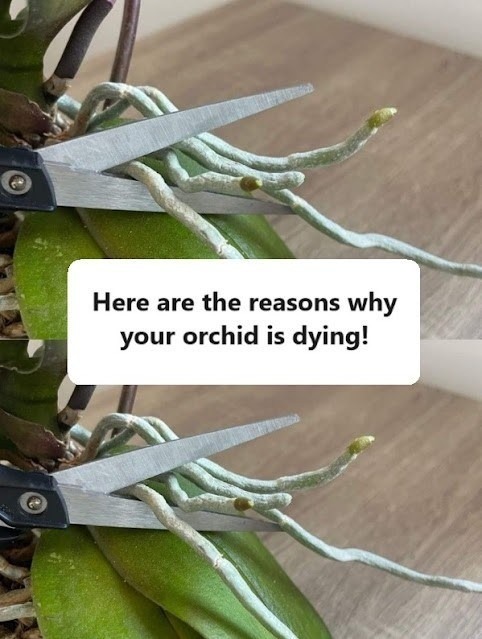
One of the most common sources of confusion for orchid owners is the appearance of aerial roots — those long, wiry roots that grow outside the pot and seem to dangle in the air. Many people mistake these for a sign that the orchid needs repotting, but that’s rarely the case. Aerial roots are completely normal and are actually a sign of a healthy, active plant.
The key is to pay attention to the color and condition of these roots. Healthy aerial roots should have green or greenish tips, which indicate they are actively absorbing moisture from the air. If the tips turn grayish or silvery, it simply means they are drying out slightly — but this doesn’t mean you should cut them off. Cutting aerial roots can stress the plant and open it up to infection.
Reviving Dry Aerial Roots
If your aerial roots are looking dry and grayish, try this simple remedy:
Fill a bowl or container with lukewarm water.
Gently immerse the dry aerial root in the water for 10–15 minutes.
Remove and allow to air dry slightly before placing back in position.
This immersion provides the necessary moisture and turns the root back to its healthy green vitality. As an added bonus, the evaporating water from the bowl can increase room humidity around the plant, which orchids absolutely love.
How to Water Your Orchid Correctly
Overwatering is the number one killer of orchids. It’s crucial not to solely depend on the color of aerial roots when determining your orchid’s watering needs. Instead, inspect the roots within the pot. Green roots indicate adequate moisture, whereas a grayish or silvery tone means they require water. The aerial roots can sometimes turn gray even when the potted roots are still moist, which can be very misleading.
A good rule of thumb: water your orchid once every 7–10 days in warm weather and every 10–14 days in cooler months. Always water in the morning so any excess moisture on leaves can evaporate during the day, preventing rot.
Other Common Reasons Your Orchid May Be Dying
1. Too Much or Too Little Light
Orchids need bright, indirect light. Direct sunlight will scorch the leaves, turning them yellow or brown with crispy edges. On the other hand, too little light will prevent blooming and cause the plant to become leggy and weak. A spot near an east- or west-facing window is ideal.
Continued on next page 👇(page 2)👇

