Useful Summary
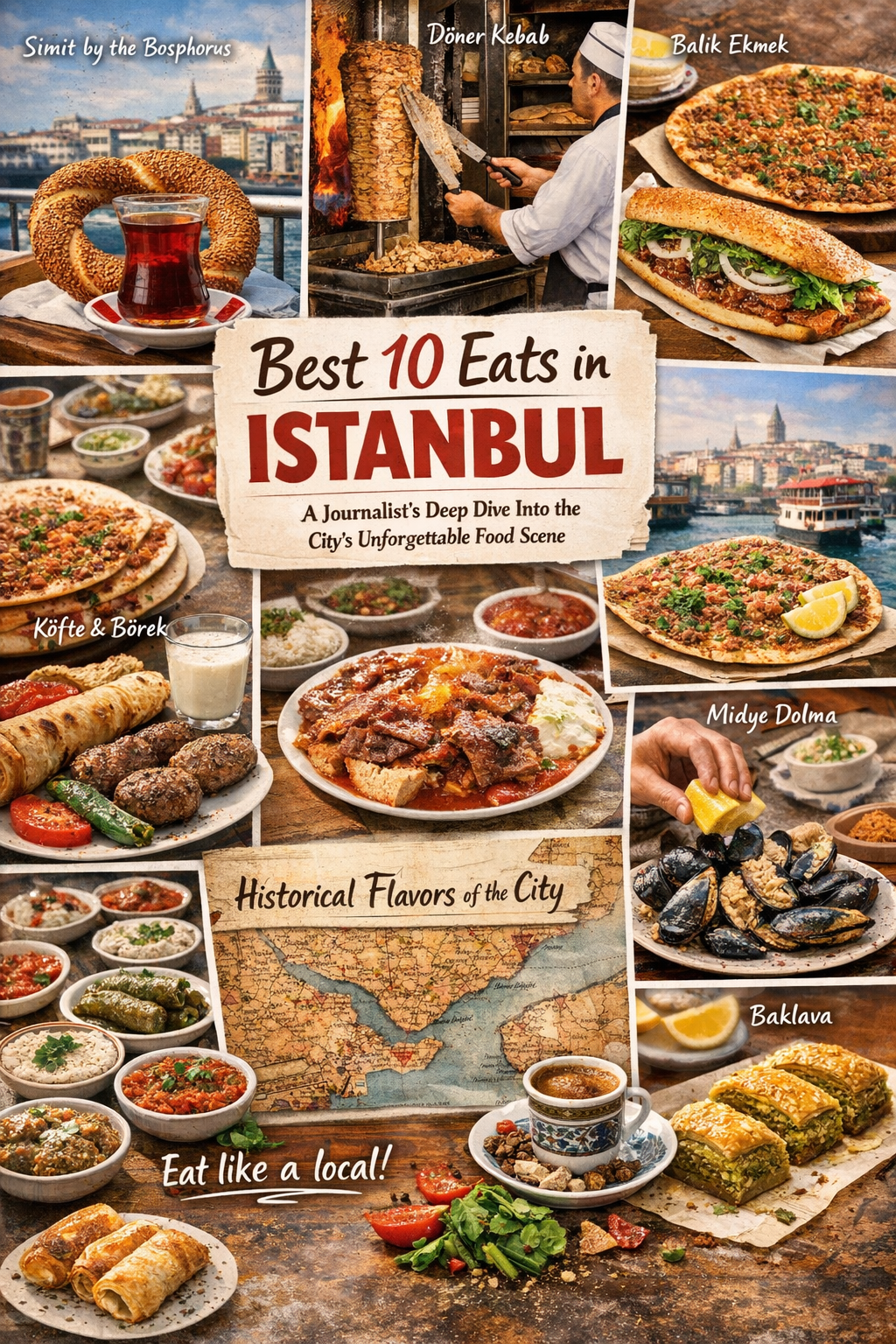
If you’re asking what are the absolute must-eat foods in Istanbul, the answer can be distilled into five iconic dishes that define the city’s taste, rhythm, and identity. Istanbul is not a place where food is simply consumed—it is negotiated, shared, debated, and remembered. The best 5 eats in Istanbul—Simit, Döner Kebab, Balık Ekmek, Lahmacun, and Baklava—are not chosen because they are fashionable, but because they are essential. Eat these five, and you will understand how Istanbul wakes up, works, socializes, celebrates, and slows down. This article explains what to eat, why it matters, and how to experience each dish like a local, not a passing tourist.
Best 5 Eat Istanbul (Analytical Overview)
Before diving into individual dishes, let’s take a step back. Istanbul has one of the most complex food cultures in the world, shaped by centuries of migration, empire, trade, and daily survival. So why narrow it down to just five foods?
The answer lies in function and meaning.
These five dishes share three critical traits:
- They are eaten by everyone, across class, age, and neighborhood
- They have remained consistent over time, resisting trends and globalization
- They reflect how Istanbul moves—on foot, by ferry, between work and home
They are not reserved for special occasions. They appear in mornings, lunches, late afternoons, and quiet nights. They are foods you eat standing up, leaning against a wall, or sitting at a small table with no rush. In short, these dishes are not just popular—they are structural to Istanbul life.
Now, let’s meet them one by one.
1. Simit – The City’s Morning Pulse
Why Simit Is Unavoidable
If Istanbul had a daily uniform, simit would be part of it. This circular bread coated with sesame seeds is eaten everywhere, by everyone, at all hours—but especially in the morning.
Simit is not glamorous. And that’s exactly why it matters.
What Makes Simit Special
At first glance, simit looks simple. But its flavor depends on technique:
- Dough dipped in grape molasses before baking
- Generous sesame coating
- Baked until crisp on the outside, soft inside
The result is a bread that crunches lightly, smells nutty, and never feels heavy.
How Locals Eat Simit
- With Turkish tea (çay) in a tulip-shaped glass
- Torn by hand, not sliced
- Often shared, rarely plated
Interactive moment:
Watch people eating simit. Notice how no one stops what they’re doing. Simit doesn’t demand attention—it fits into life.
Where Simit Belongs
- Ferry terminals along the Bosphorus
- Outside metro stations
- Near mosques after morning prayers
To eat simit is to participate in Istanbul’s daily rhythm.
2. Döner Kebab – Precision Behind Simplicity
Why Döner Is Misunderstood
Globally, döner kebab is often reduced to fast food. In Istanbul, it is treated as a craft. The difference lies in meat quality, patience, and restraint.
A good döner shop may serve only one thing—and serve it perfectly.
What Defines Real Döner
- Whole cuts of lamb or beef stacked vertically
- Minimal seasoning to respect the meat
- Slow, even rotation near heat
There is no rush. The meat cooks in its own time.
Ways to Eat Döner in Istanbul
- Ekmek arası döner (inside bread, quick and direct)
- İskender döner (with yogurt, tomato sauce, melted butter)
- On a plate with rice and vegetables
Each version serves a different moment of the day.
A Local Rule
If the döner stack is enormous and perfectly uniform, be cautious. Craft prefers modest scale.
Interactive moment:
Listen to the sound of the knife against the meat. Rhythm tells you everything.
3. Balık Ekmek – Eating With the Sea
Why Balık Ekmek Is Pure Istanbul
Istanbul is surrounded by water, divided by it, defined by it. Balık ekmek—a simple fish sandwich—is the city’s edible geography lesson.
What’s Inside
- Freshly grilled fish (usually mackerel or bonito)
- Crusty white bread
- Raw onion
- Lettuce
- Lemon juice
Nothing more. Nothing less.
The Experience Matters
You rarely sit down to eat balık ekmek. You stand near the water, seagulls overhead, charcoal smoke in the air. The city moves around you.
Why It Matters
Balık ekmek connects:
- Fishermen and office workers
- Locals and visitors
- The past and the present
It’s affordable, filling, and deeply tied to place.
Interactive moment:
Take a bite and look at the water. Ask yourself—could this sandwich exist anywhere else?
4. Lahmacun – Speed, Balance, Intelligence
Why Lahmacun Deserves Respect
Often mislabeled as “Turkish pizza,” lahmacun is older, lighter, and more disciplined. It’s a food designed for efficiency without sacrifice.
What Goes on Lahmacun
- Finely minced meat
- Tomato and onion
- Parsley and mild spices
- Ultra-thin dough
Baked in seconds in a stone oven.
How Locals Eat It
- Add fresh parsley and onion
- Squeeze lemon generously
- Roll it tightly
- Eat immediately
Hesitation ruins lahmacun. Timing is everything.
Why It Works Today
Lahmacun fits modern Istanbul:
- Fast but handmade
- Cheap but satisfying
- Portable but balanced
It’s the city thinking on its feet.
5. Baklava – Controlled Luxury
Why Baklava Ends the Journey
Baklava is not everyday food—and that’s why it matters. In Istanbul, dessert is about discipline, not excess.
What Makes Great Baklava
- Dozens of paper-thin pastry layers
- High-quality pistachios
- Clarified butter
- Light, measured syrup
The goal is harmony, not sweetness overload.
How Locals Eat Baklava
- One or two pieces only
- Slowly
- With Turkish coffee or tea
Too much baklava is considered disrespectful—to the dessert and to yourself.
A Cultural Detail
People in Istanbul argue intensely about where the best baklava is made. These arguments are rarely resolved—and that’s the point.
Historical Perspective: Why These Foods Endured
During the Ottoman Empire, Istanbul was home to some of the most sophisticated palace kitchens in the world. Chefs specialized in single dishes, refining techniques over decades. When the empire declined, those skills didn’t vanish—they moved into neighborhoods, bakeries, and street stalls.
We’ve seen similar patterns before:
- Rome after the Roman Empire
- Paris after the fall of the monarchy
- Beijing after imperial dynasties
In each case, empire collapsed, but cuisine remained.
The five foods on this list survived because they were useful, adaptable, and deeply loved—not because they were elite.
Why These 5 Foods Still Matter Today
In a globalized food world, Istanbul resists uniformity. These dishes remain dominant because:
- They require skill, not branding
- They fit daily routines
- They don’t depend on trends
You don’t need an app to find simit. You don’t need a reservation for lahmacun. That accessibility is their strength.
Conclusion: To Eat Istanbul Is to Move With It
The best 5 eats in Istanbul are not about luxury dining or curated experiences. They are about movement, memory, and moderation. They teach you when to eat quickly, when to slow down, and when to stand still with food in your hand.
Looking forward, Istanbul faces a familiar challenge: modernization without erasure. The future of its food culture depends on whether these dishes remain lived habits or become museum pieces.
For now, they are alive.
So when you visit Istanbul:
- Eat at least one meal standing up
- Follow locals, not trends
- Respect simple food made daily
Because in Istanbul, the most important meals don’t try to impress you.
They simply invite you to belong.